




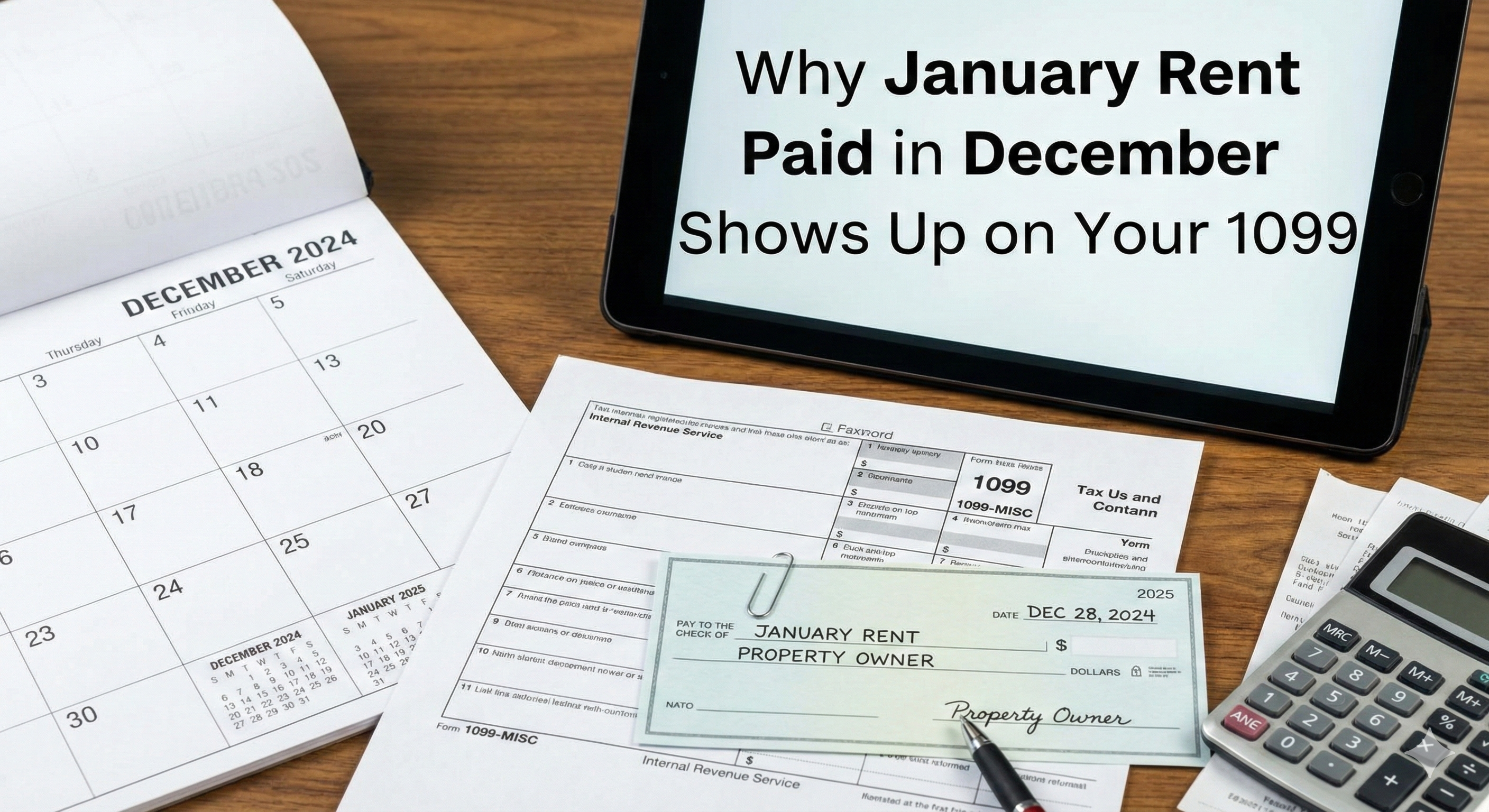
Why January Rent Paid in December Shows Up on Your 1099
Every year around tax time, we get the same question from owners.
A resident pays January rent a few days early, usually in late December, and then the question comes up:
“Why is this included on my 1099 for this year? That’s January rent.”
Totally fair question. And you’re not alone; this comes up for property owners everywhere.
Here’s the short answer: the IRS cares about when rent is received, not what month it applies to.
How the IRS Looks at Rental Income
Most rental property owners file taxes on a cash basis. That simply means income is reported when they receive the money, not when the rent period starts, and not “on their behalf”.
So if rent comes in during December, even if it’s for January, the IRS considers that December income.
“But I Didn’t Get Paid Until January…”
Even if:
We label it as “January rent.”
We don’t send your owner distribution until January
Everyone mentally thinks of it as January rent
…the IRS still says it counts in the year it was received.
This is because of a tax concept called constructive receipt. In plain terms, once rent is paid and available to you (even if it’s being held by your property manager), the IRS treats it as income at that time.
You can read the regulation directly here: https://www.law.cornell.edu/cfr/text/26/1.451-2
The IRS Is Very Clear on This
The IRS specifically states that advance rent must be reported in the year it’s received, regardless of the period it covers. January rent paid in December is still December income for tax purposes.
This isn’t a Foothills rule; it’s an IRS rule that applies to all property managers. You can read more about that on the IRS website here: https://www.irs.gov/taxtopics/tc414
A Real-World Example
Let’s say:
Your resident pays $2,000 on December 28
That payment is for January rent
The funds are distributed to you in early January
That $2,000 must be included on your year-end 1099.
But here’s the key part:
That income is not reported twice.
Because the rent was already counted in the prior year, it will be excluded from January's income in the following year. In other words, the prepayment is recognized once, and only once; it simply shifts the timing.
Why This Comes Up Every Year
This happens because:
Residents like paying early
Owners think in rental months
Accounting systems label rent by period
But IRS tax reporting is based on receipt, not intent or labels.
What to Expect Going Forward
Any rent received before December 31 will be included on that year’s 1099. That same amount will then be deducted from the following year’s income totals, so it isn’t counted again.
We follow this approach every year to stay compliant and keep your records accurate.
If you have questions about how this affects your personal tax return, your CPA can help you determine the best way to report it.
And as always, if something doesn’t look right, we’re happy to review it with you.