




HUD Withdraws Key Fair Housing Guidance: What Self-Managing Landlords Need to Know
If you own rental property and manage it yourself, this is one of those updates you do not want to ignore.
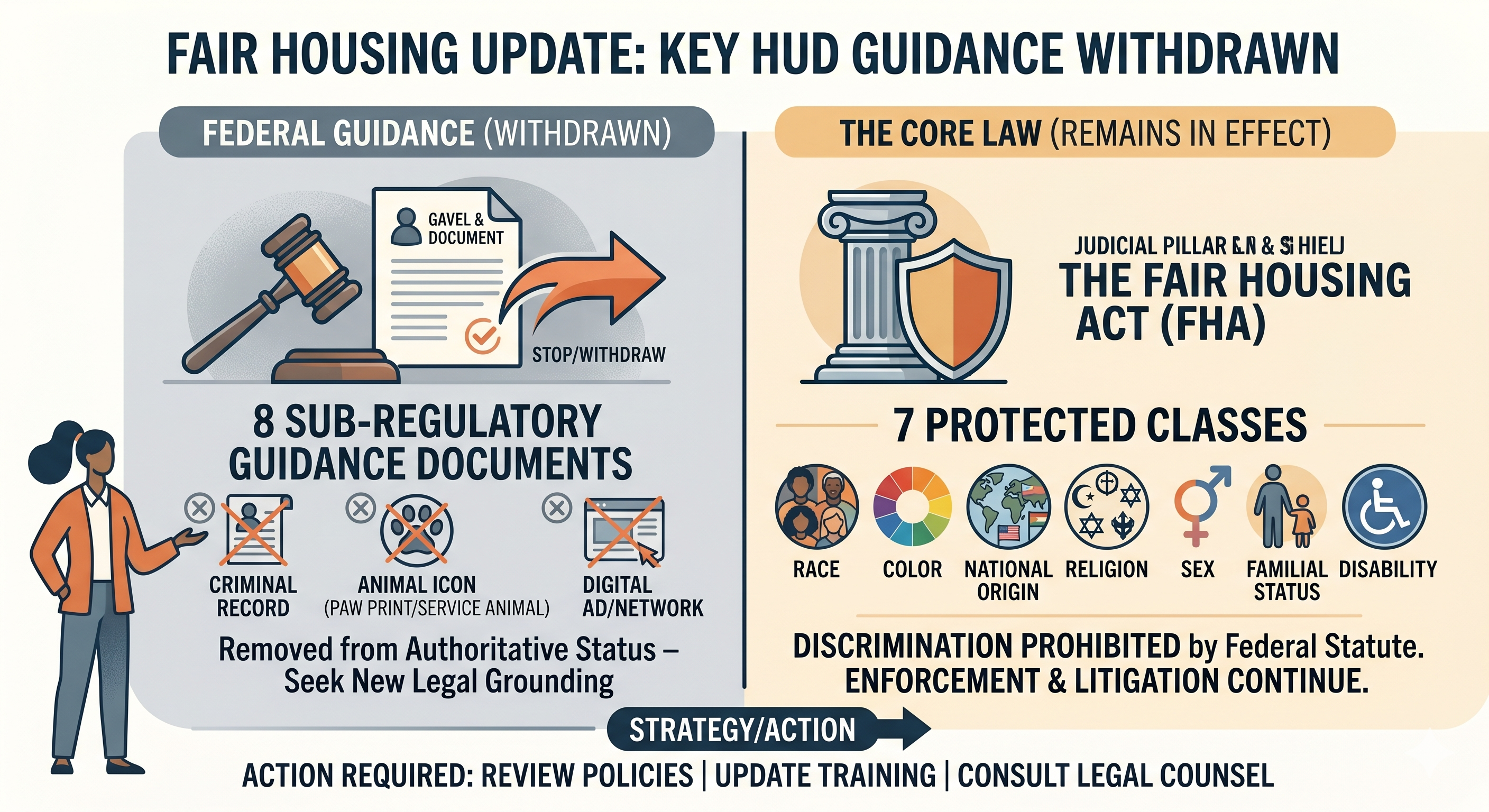
HUD has officially withdrawn several Fair Housing and Equal Opportunity guidance documents that many housing providers have relied on for years. The withdrawal was published in the Federal Register, and the documents were officially withdrawn as of September 17, 2025.
Now, before anyone gets the wrong idea, this does not mean fair housing laws went away. It does not mean landlords suddenly have more freedom to do whatever they want. What it does mean is that some of the detailed guidance HUD had issued to explain how it interpreted and applied fair housing law is no longer in place.
And for self-managing landlords, that matters.
Why HUD withdrew the guidance
HUD says it is trying to reduce guidance it believes exceeded the actual wording of federal law. In plain English, HUD is pulling back documents it felt were adding requirements or interpretations that were not clearly grounded in the law itself.
According to HUD, the withdrawn guidance fell into that category because it:
, was not specifically required by law
, did not closely match the text of federal statutes
, created extra compliance burdens without a clear legal basis
Whether you agree with that or not, the practical takeaway is the same: the legal roadmap many landlords had been using just changed.
Which guidance documents were withdrawn?
Several of the withdrawn documents addressed issues that regularly arise in rental housing.
Assistance animals
HUD withdrew both its 2013 and 2020 guidance documents on assistance animals, including emotional support animals. This is a big one, because many landlords and property managers leaned heavily on those memos when handling reasonable accommodation requests.
Criminal records
The 2022 guidance on the use of criminal history in housing decisions was also rescinded.
Digital advertising
HUD pulled its 2024 guidance on how fair housing laws apply to online advertising and digital marketing.
Limited English proficiency
The 2007 guidance on residents and applicants with limited English proficiency was also withdrawn.
Sexual orientation and gender identity
HUD also withdrew its 2021 memo regarding fair housing enforcement related to sexual orientation and gender identity.
What this means for self-managing landlords
This is the part that matters most.
If you manage your own rentals, you are the leasing agent, the policy writer, the decision maker, and the one carrying the legal risk. So when guidance disappears, you do not get to ignore the issue, you just lose some of the extra explanation that used to help interpret it.
The Fair Housing Act still applies
That is the most important point here.
HUD can still investigate fair housing complaints. Fair housing laws still apply. Discrimination is still discrimination. The difference is that some of the detailed guidance landlords had been using to navigate gray areas is no longer there.
That means it is even more important to make sure your decisions are thoughtful, consistent, and legally defensible.
This is a good time to review your policies
If your leasing procedures, screening policies, advertising language, or accommodation process were based on old HUD guidance, now is the time to revisit them.
That is especially true if you self-manage and have built your process based on what you found online, what another landlord told you, or forms you have been using for years without ever having an attorney review them.
Do not confuse “guidance withdrawn” with “rules no longer matter.”
This is where landlords get themselves into trouble.
Just because HUD withdrew a memo does not mean you are in the clear to deny every ESA request, use broad criminal screening policies, or advertise however you want. The underlying law is still there. Fair housing complaints are still real. Liability is still real.
The guidance may be gone, but the risk is not.
State and local laws may still be stricter
Even if federal guidance changed, your state or local laws may still impose additional requirements. Those have not automatically gone away just because HUD changed course.
Self-managing landlords often focus only on federal law, but that can be a costly mistake. You need to understand the rules that apply to your property.
This is attorney territory, not guesswork
I say this all the time in different ways. Owning rental property comes with legal obligations, whether you are ready for them or not.
This is not an area where landlords should rely on social media advice, landlord forums, or “I have always done it this way.” If your policies were built around the old HUD guidance, now is the time to have your attorney review them to ensure your process still holds up.
The bigger lesson for self-managing landlords
This update is also a good reminder of something many landlords learn the hard way: self-managing is not just collecting rent and handling the occasional repair.
It means staying current with legal changes, understanding how federal, state, and local laws overlap, knowing when to seek professional advice, and ensuring your systems are built to protect you.
That is a lot to carry on your own, especially when the rules keep moving.
Bottom line
HUD has withdrawn several key fair housing guidance documents, including guidance on assistance animals, criminal records, digital advertising, limited English proficiency, and sexual orientation and gender identity.
But the Fair Housing Act still applies.
For self-managing landlords, this is not a signal to relax. It is a signal to tighten up. Review your policies, ensure your practices comply with current law, and get legal guidance before making changes in areas that pose fair housing risk.
Because when you manage your own rentals, the liability does not get shared. It sits with you.